


KlangHaus
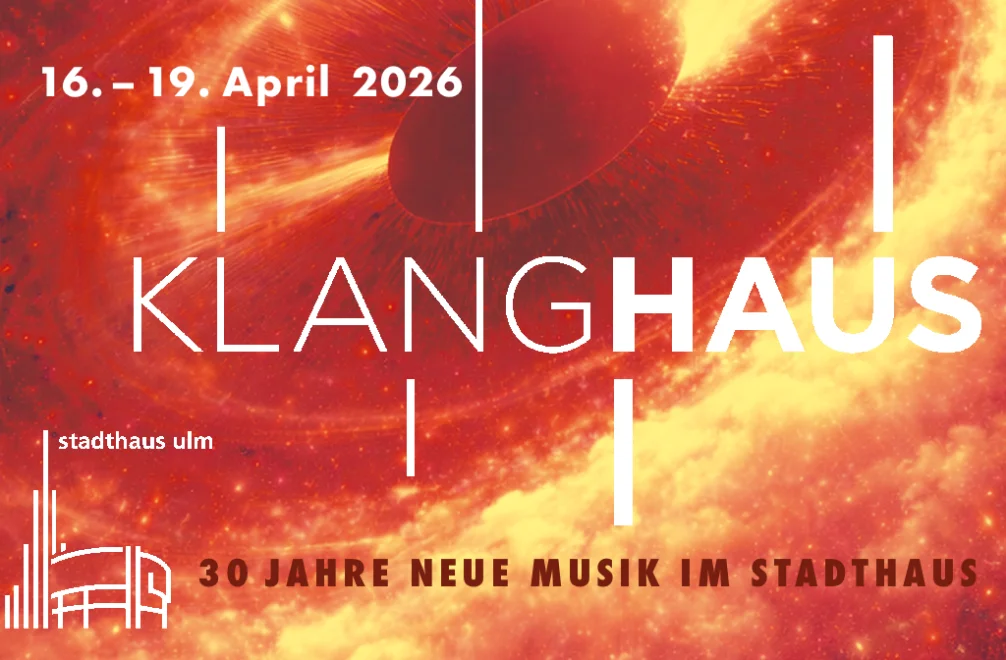
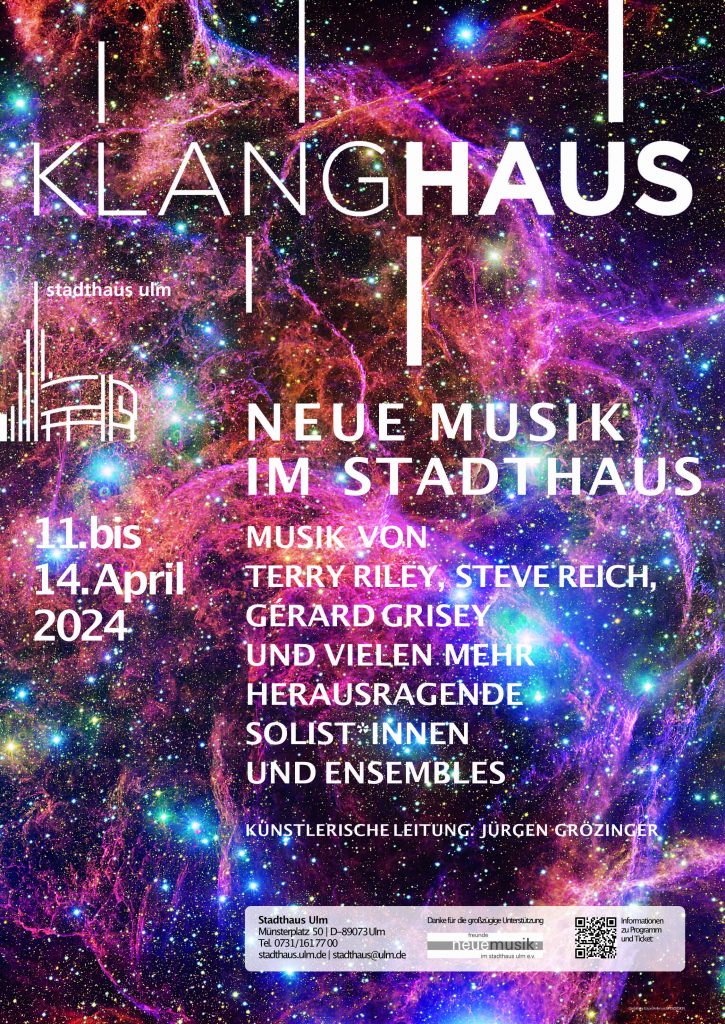
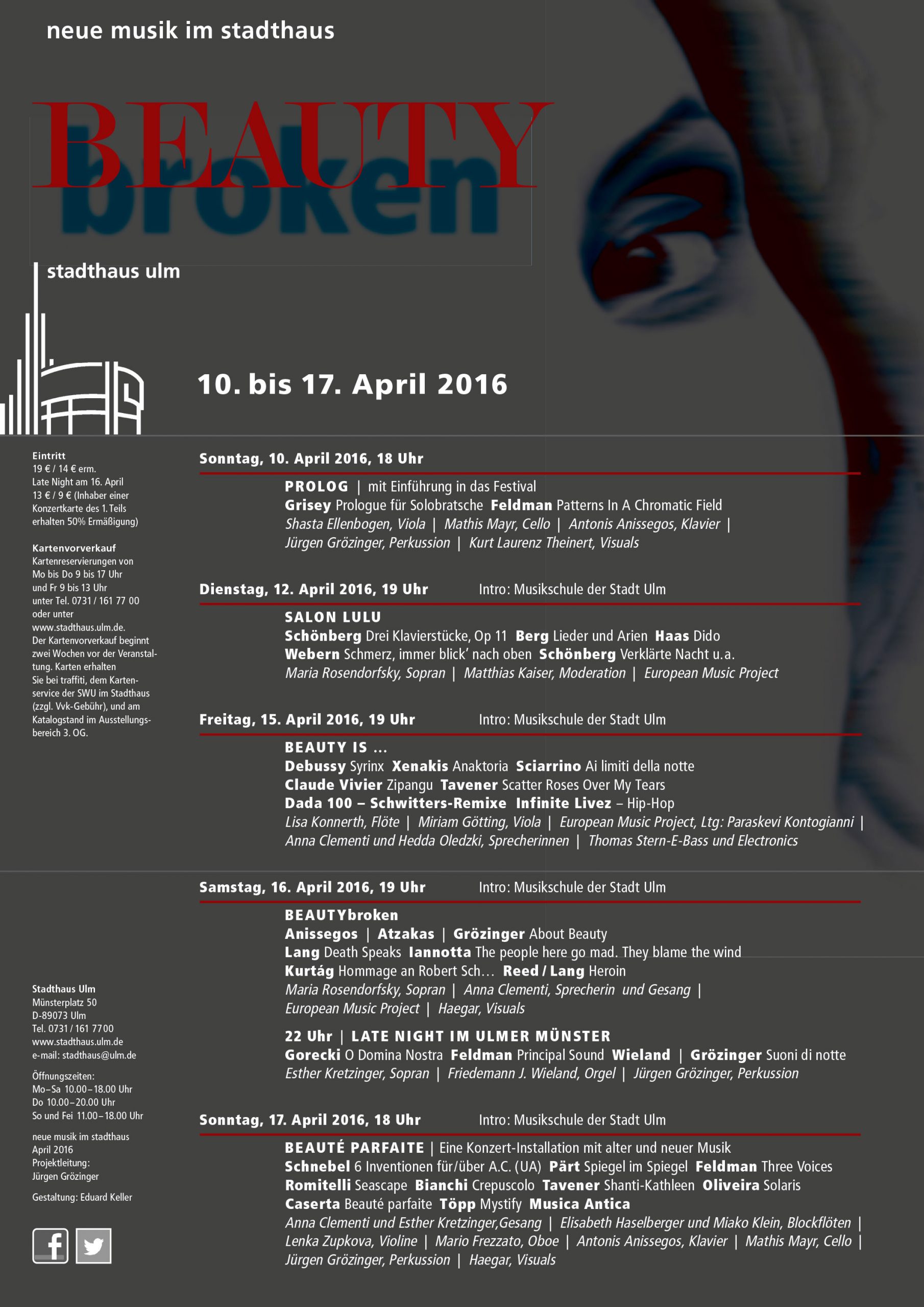
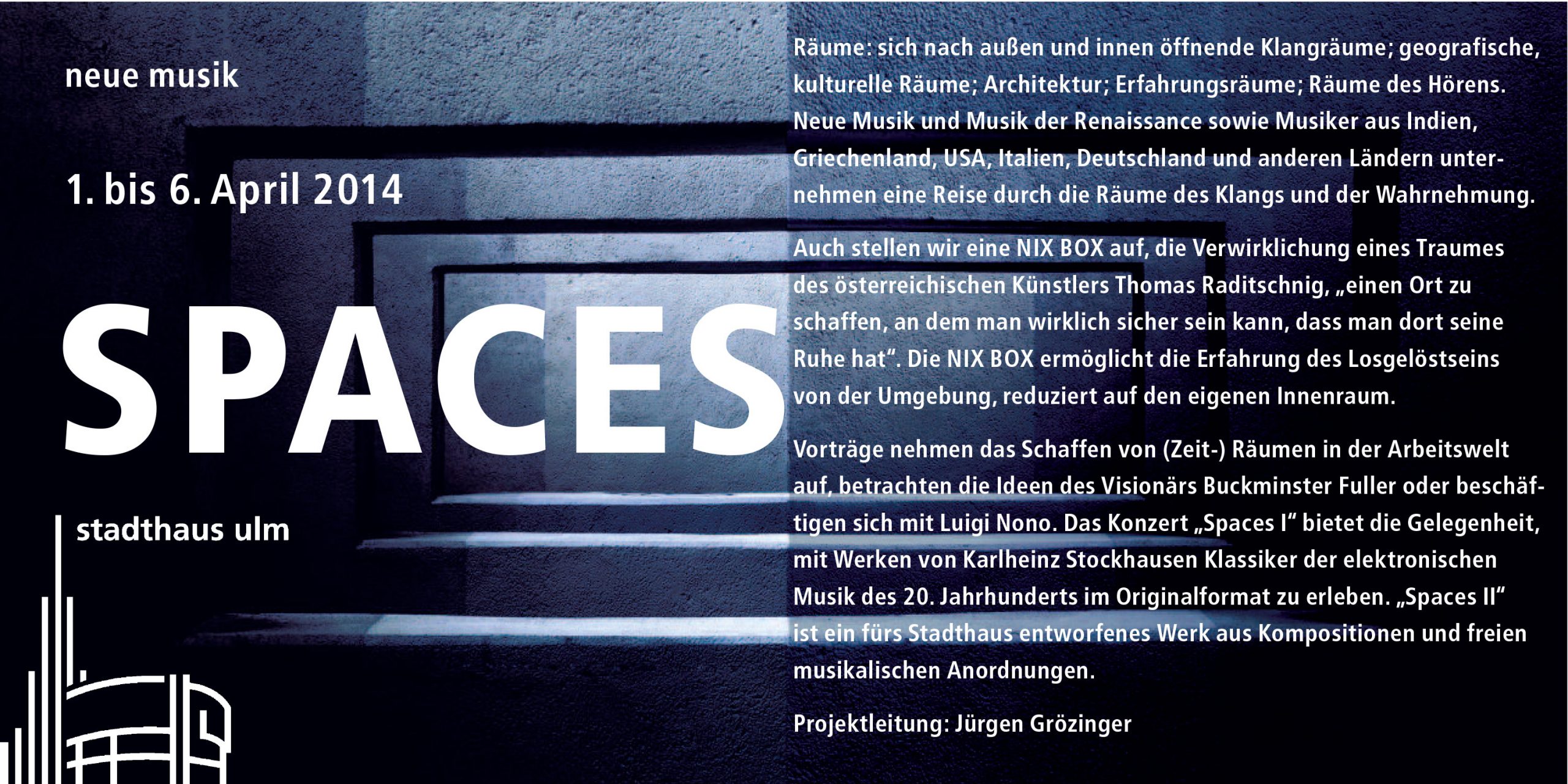
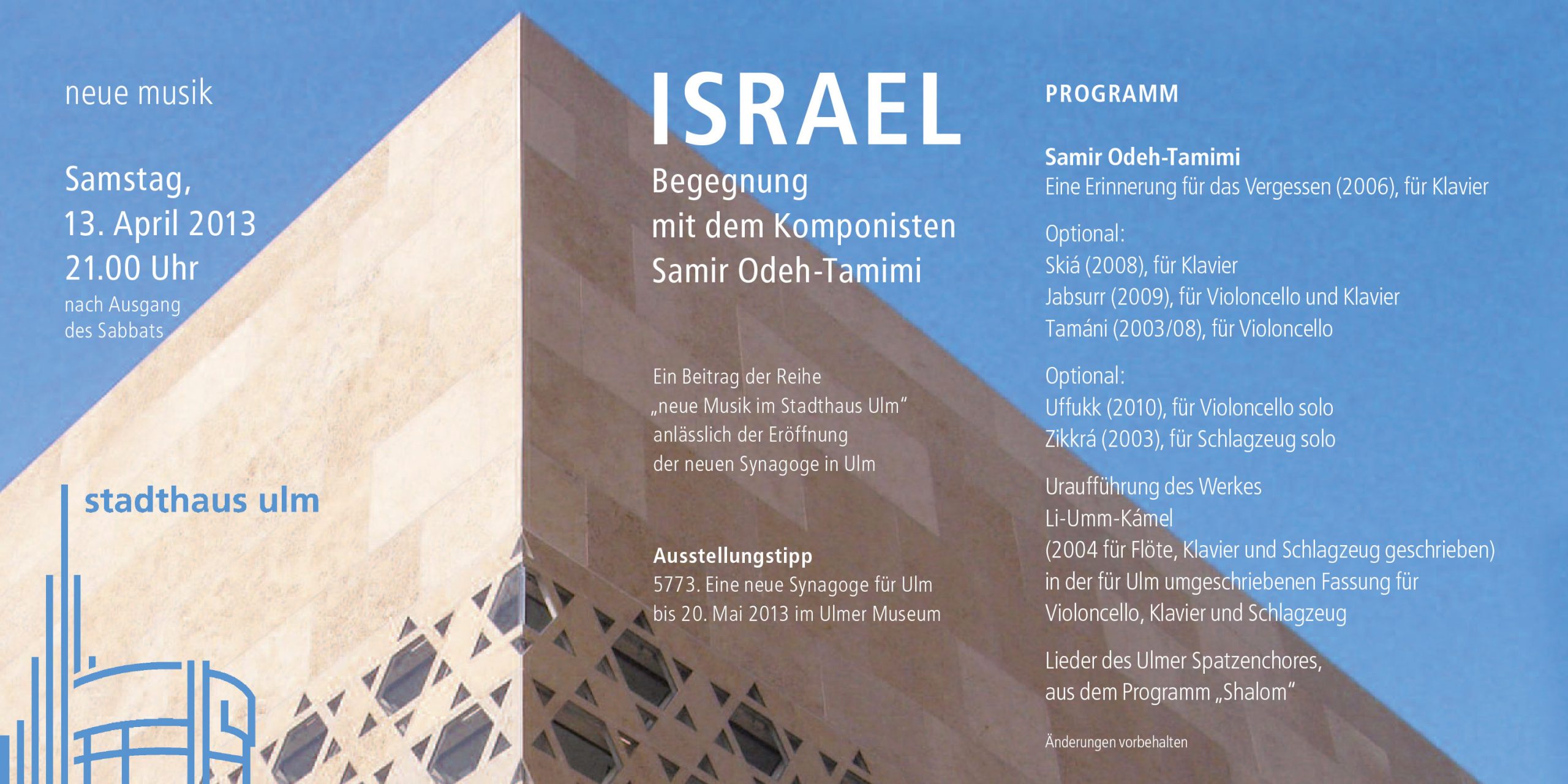
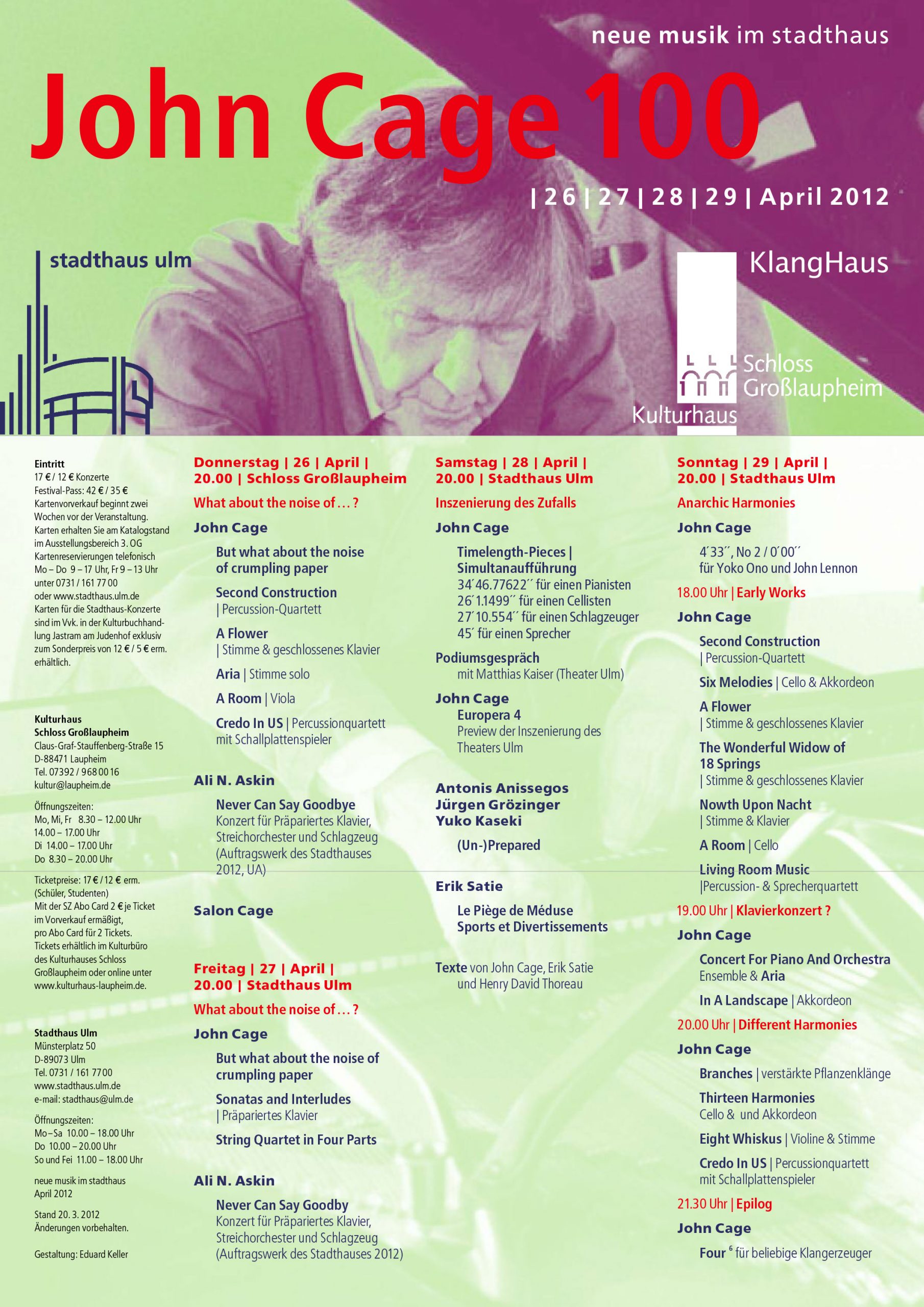
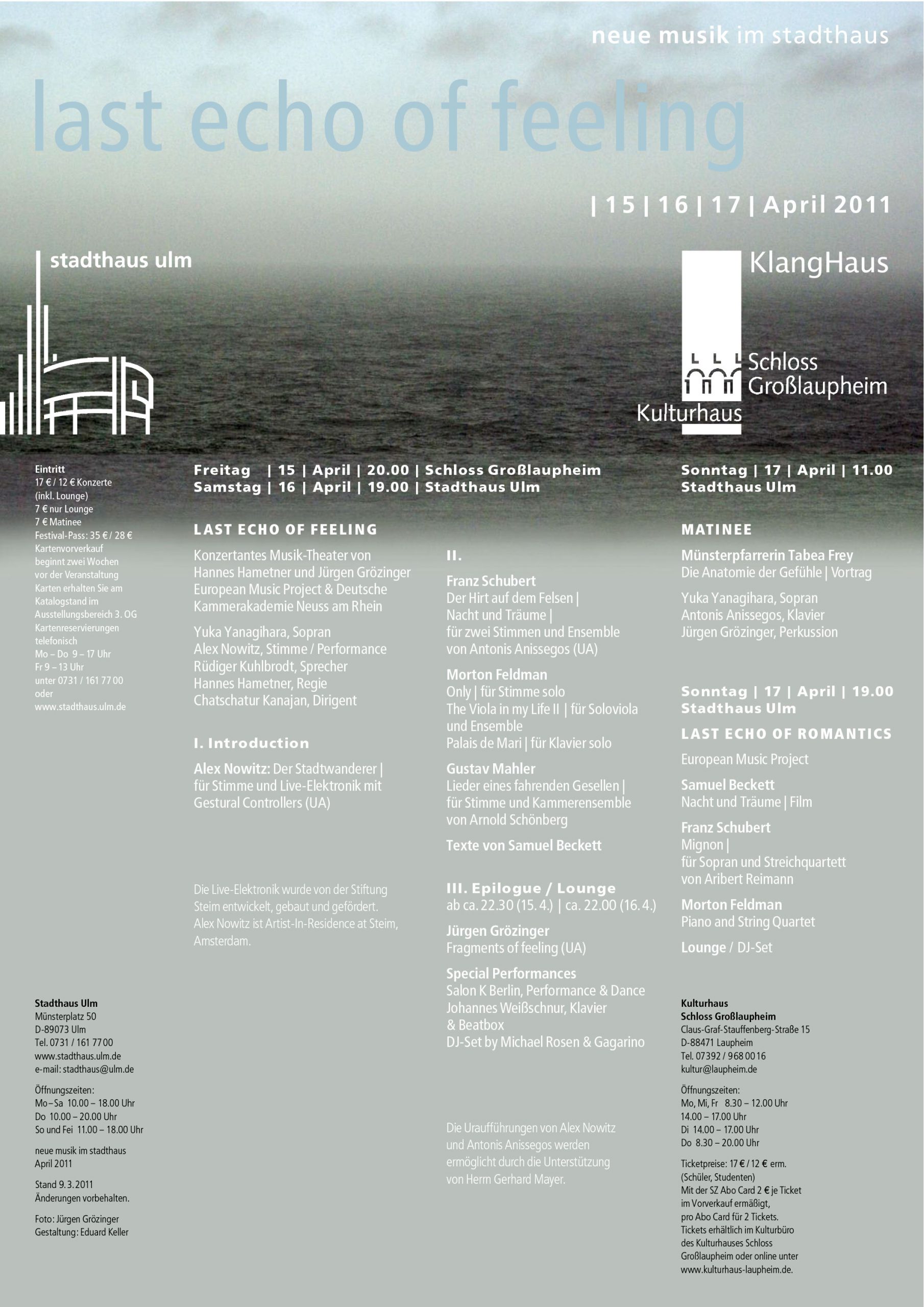
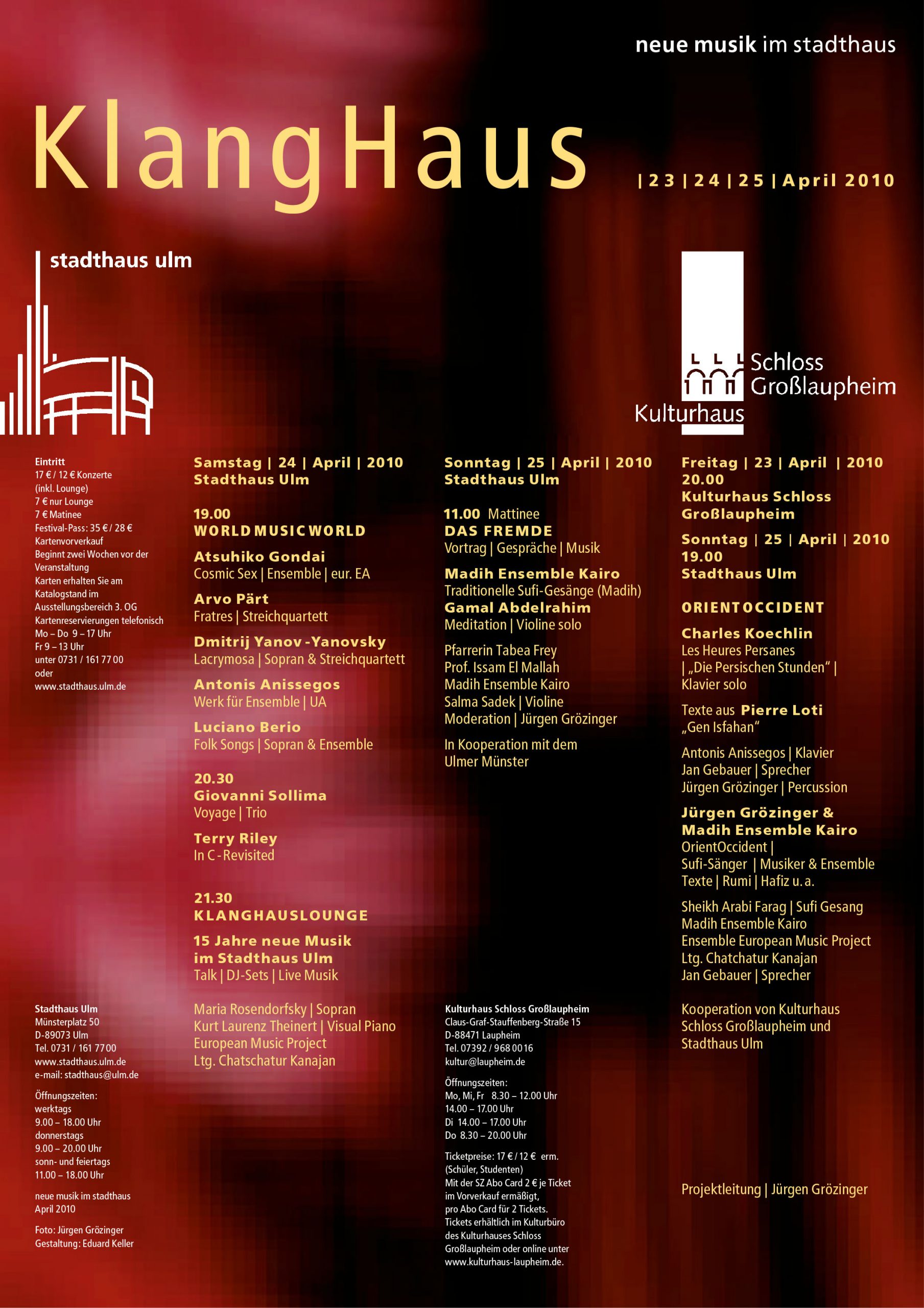
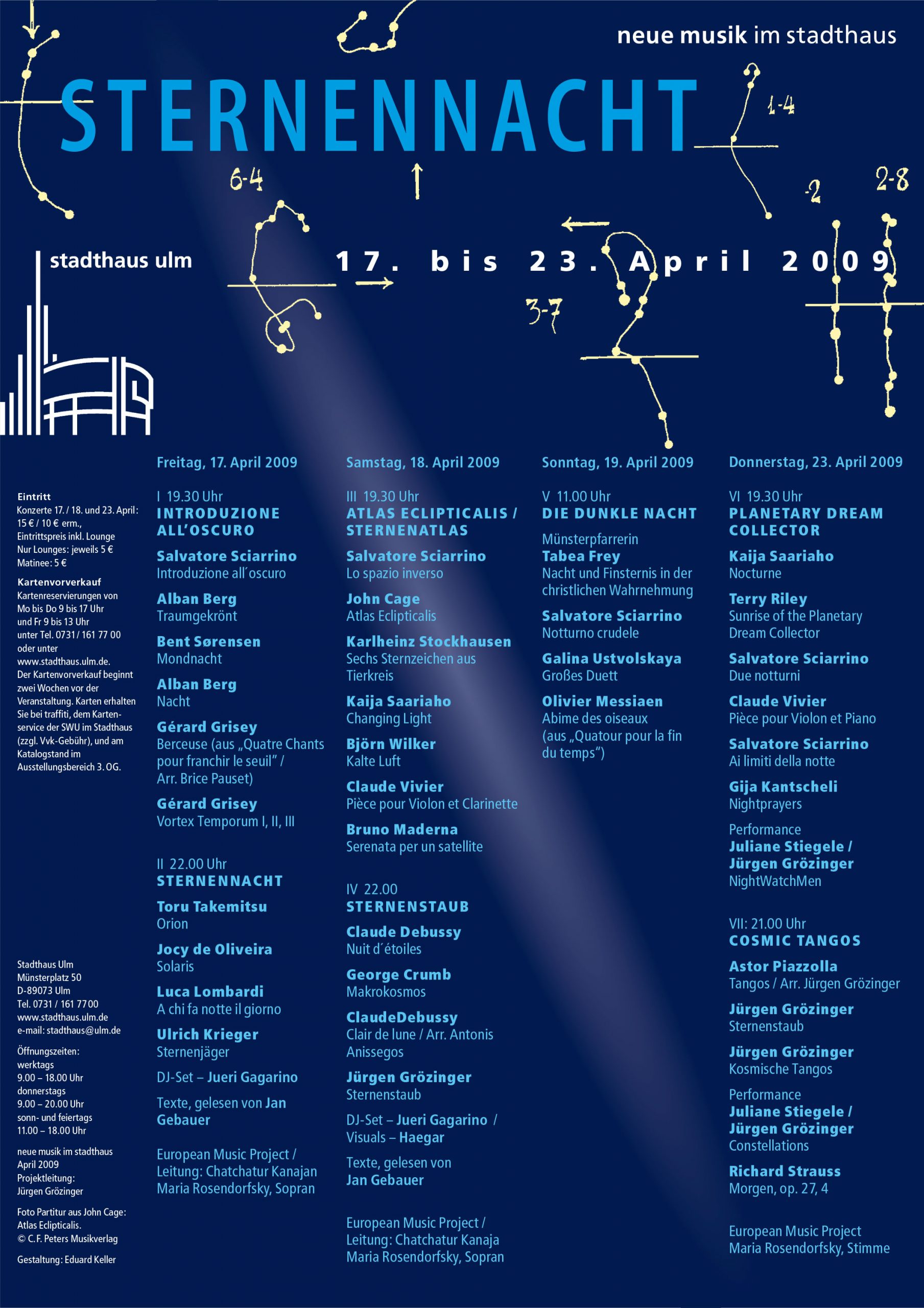
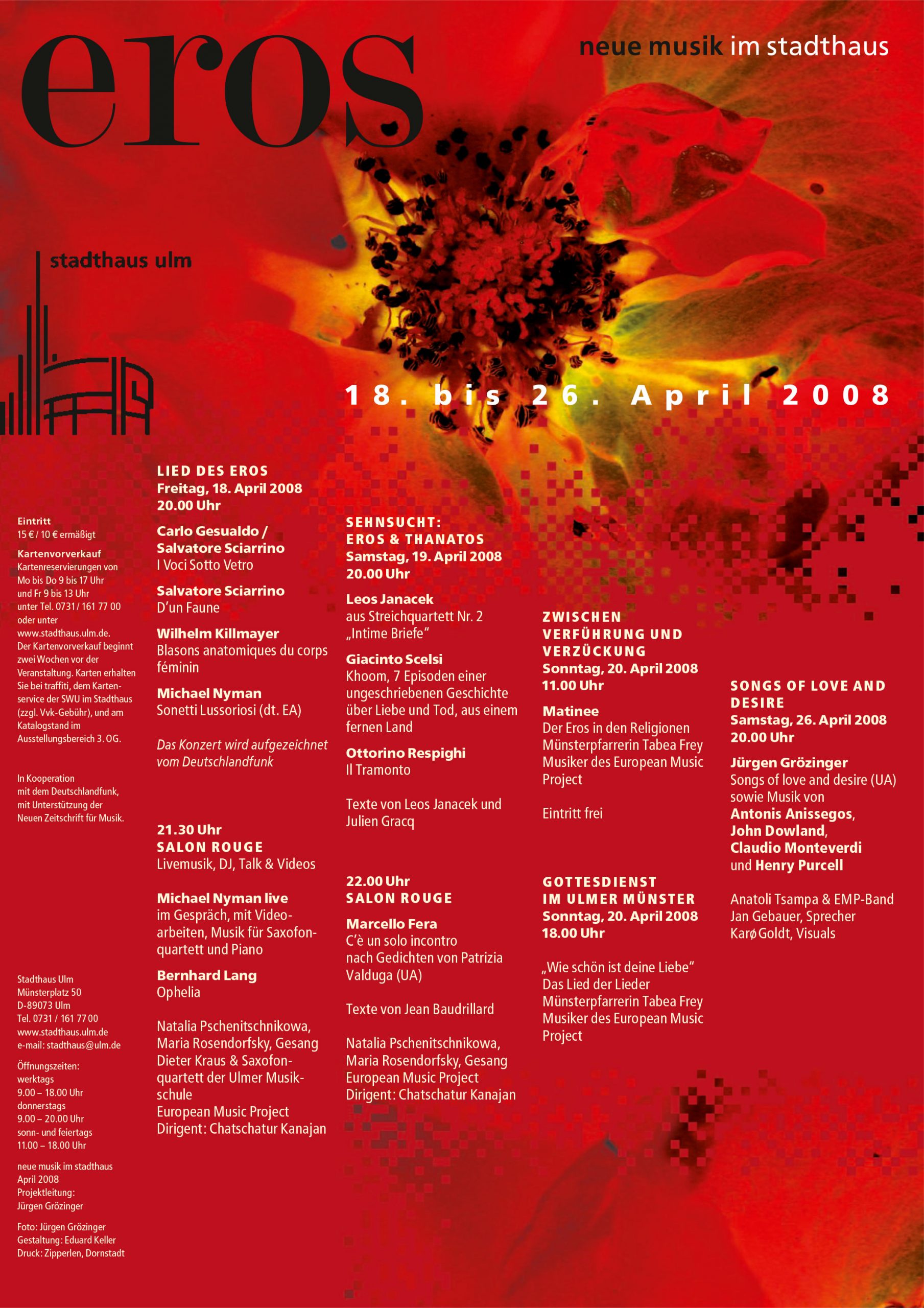
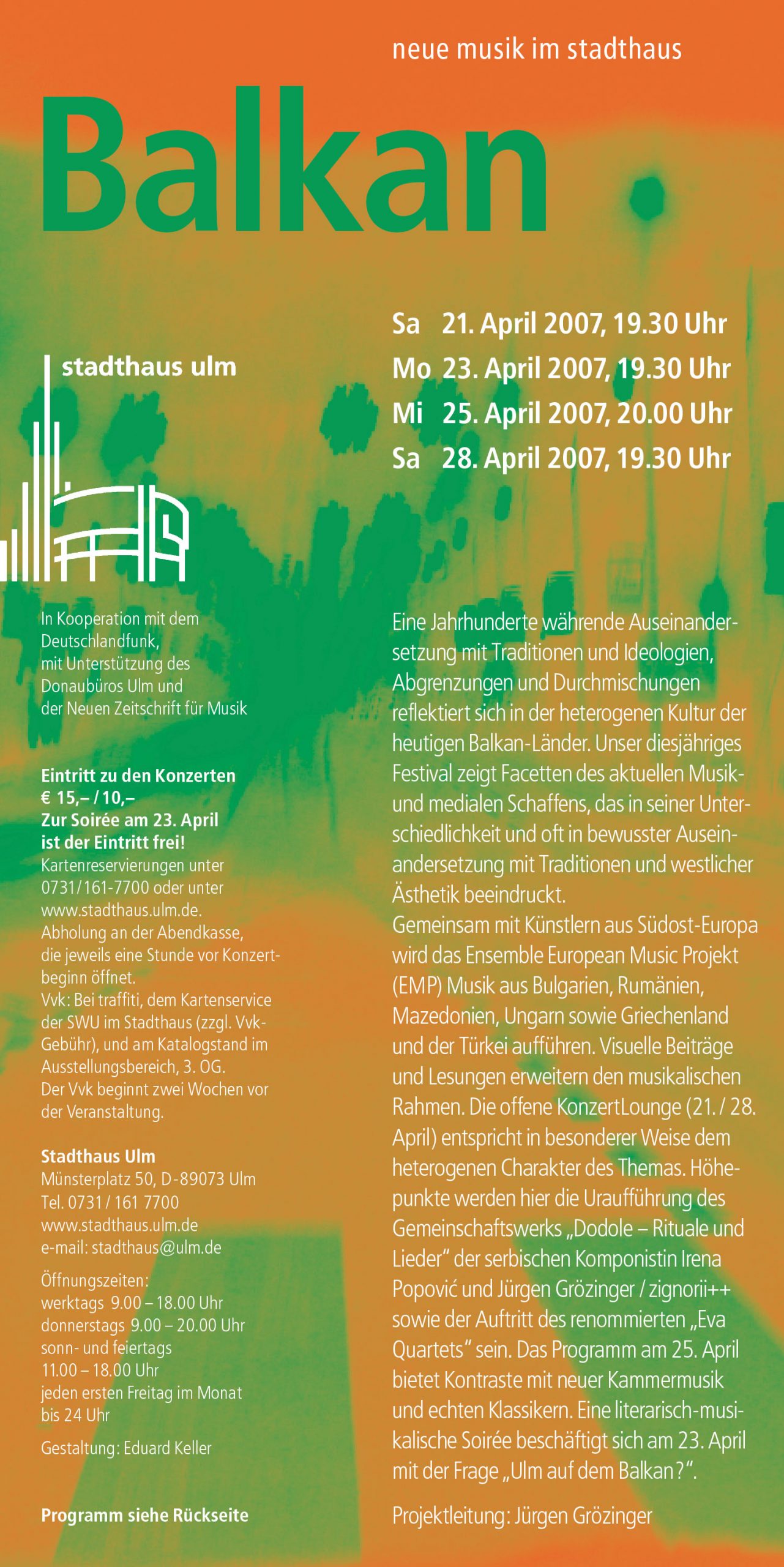
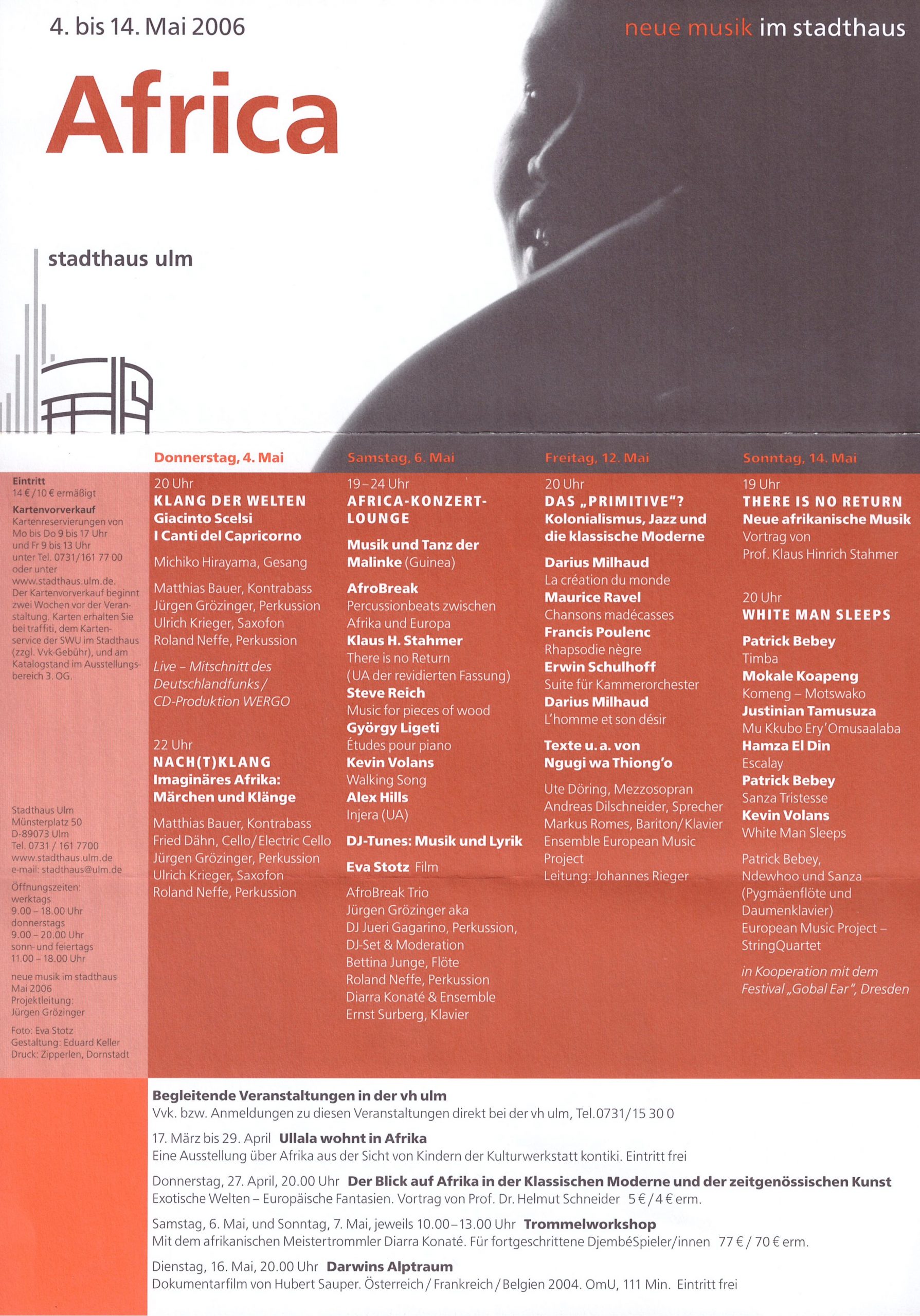
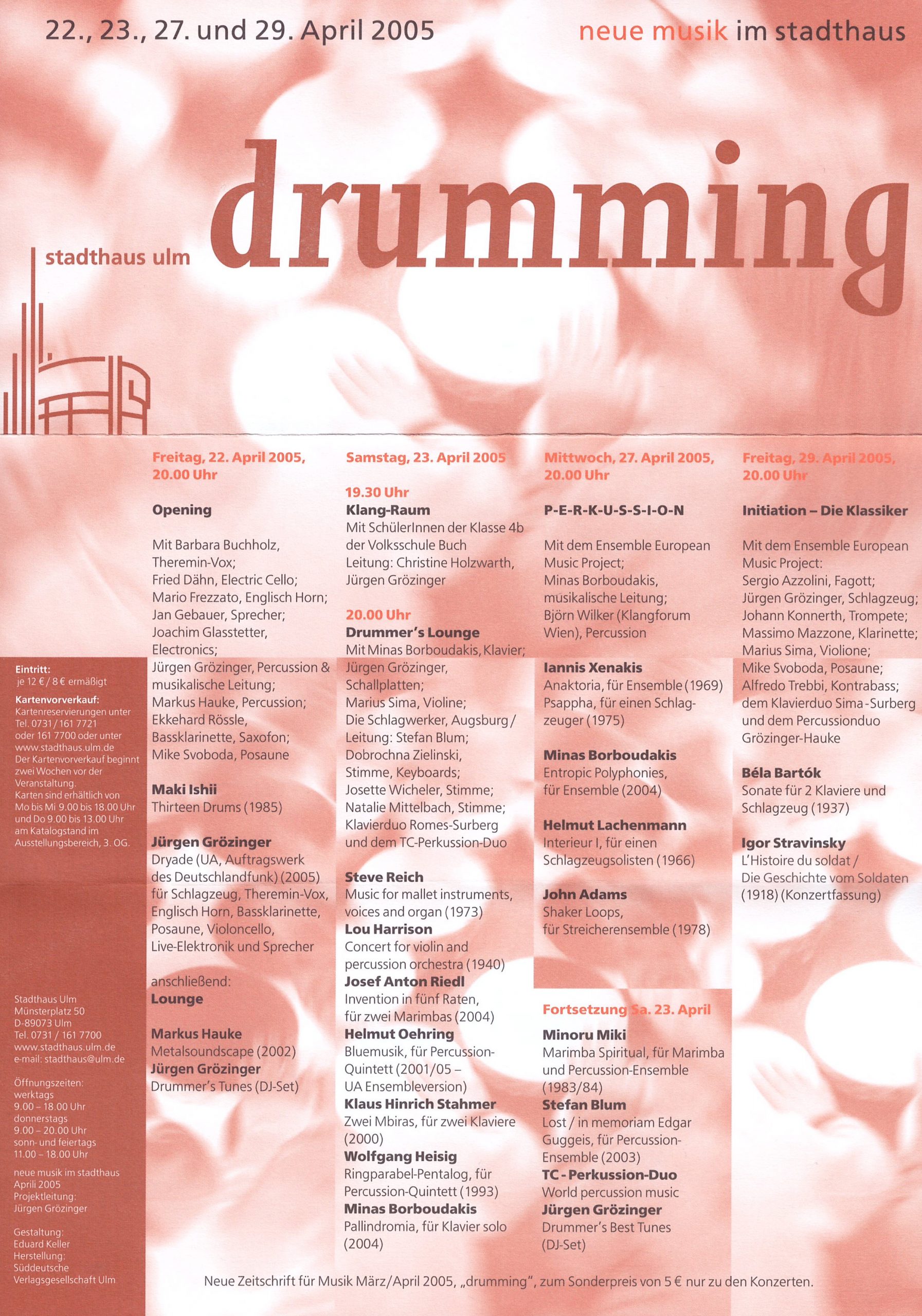
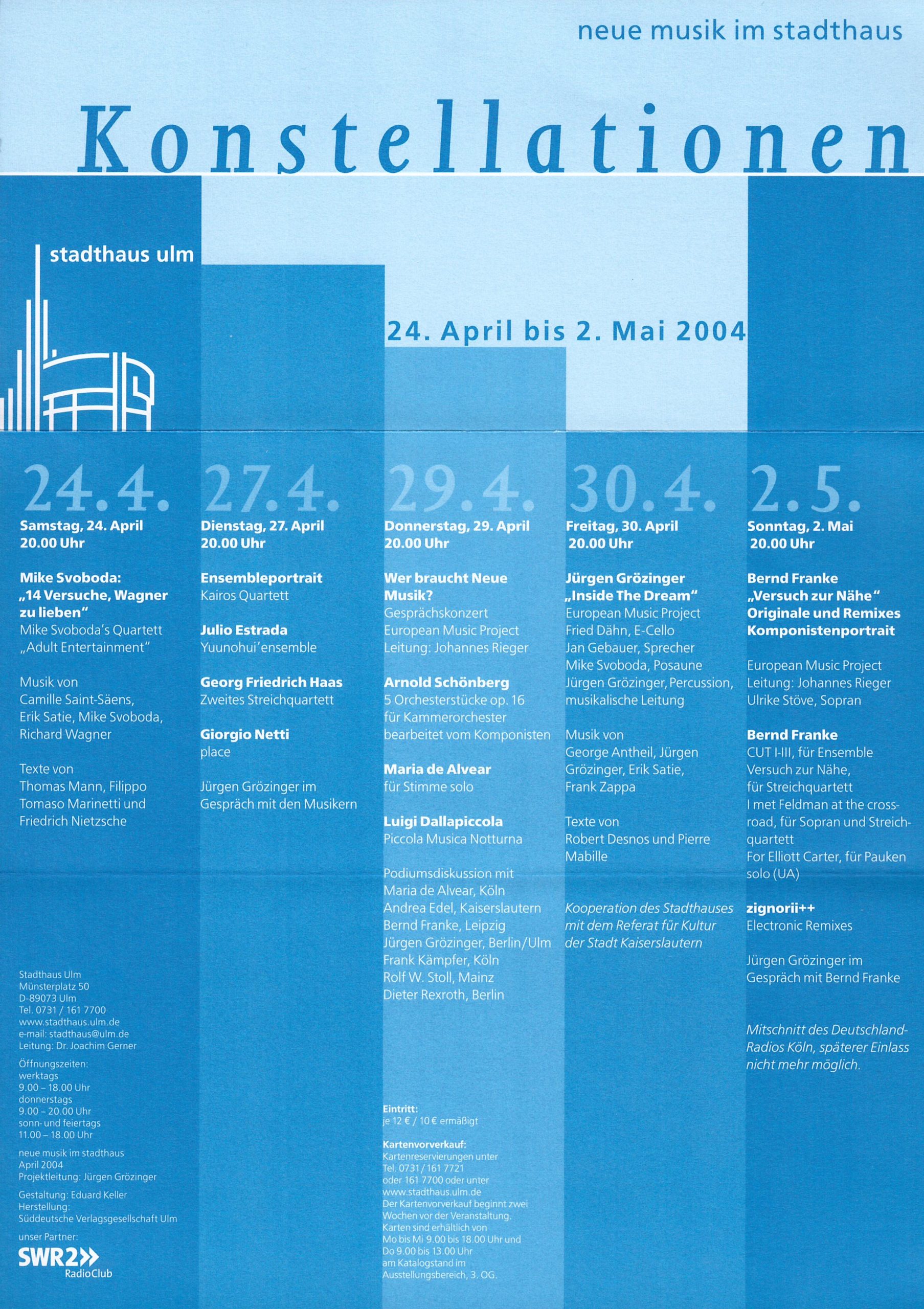
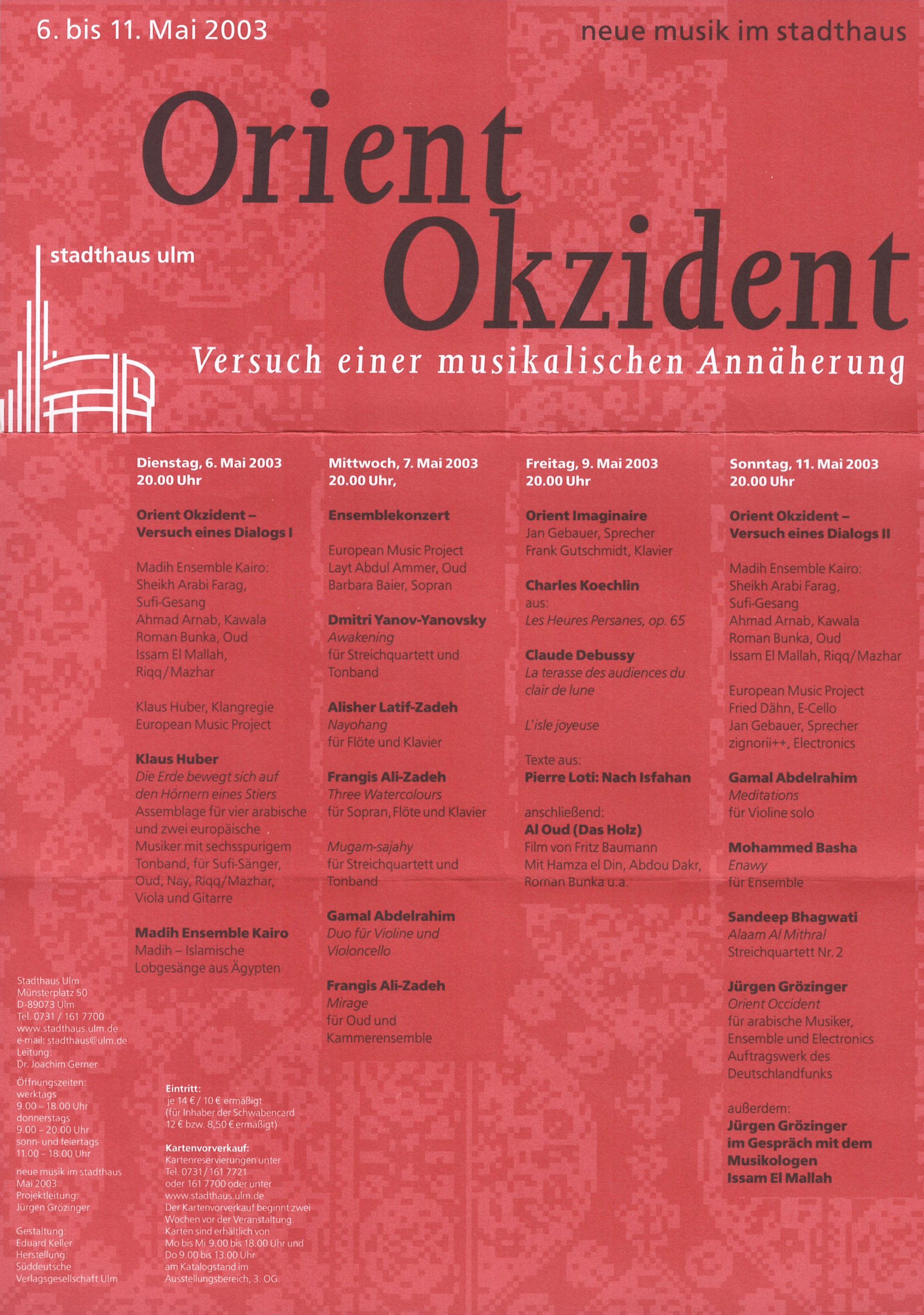
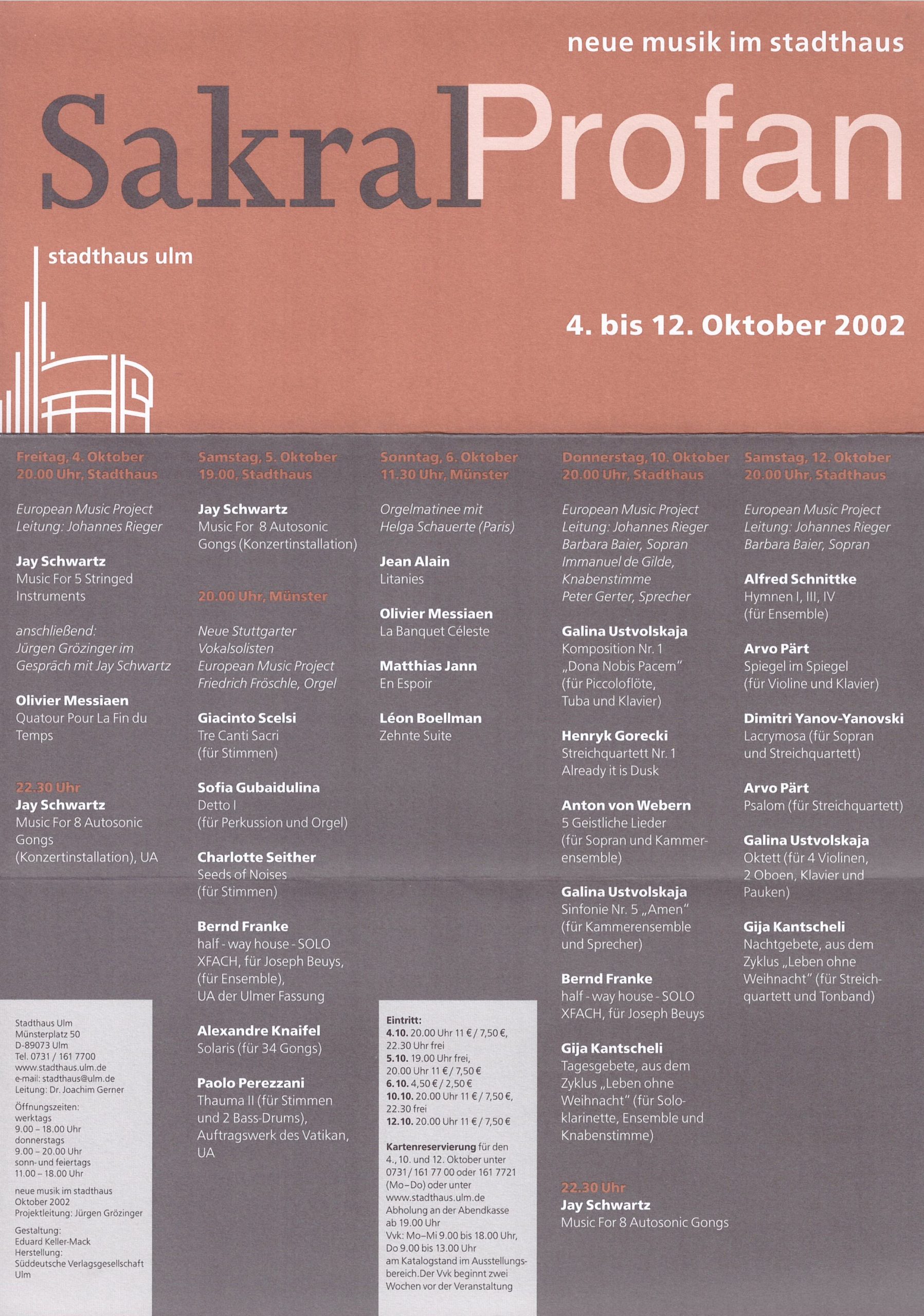
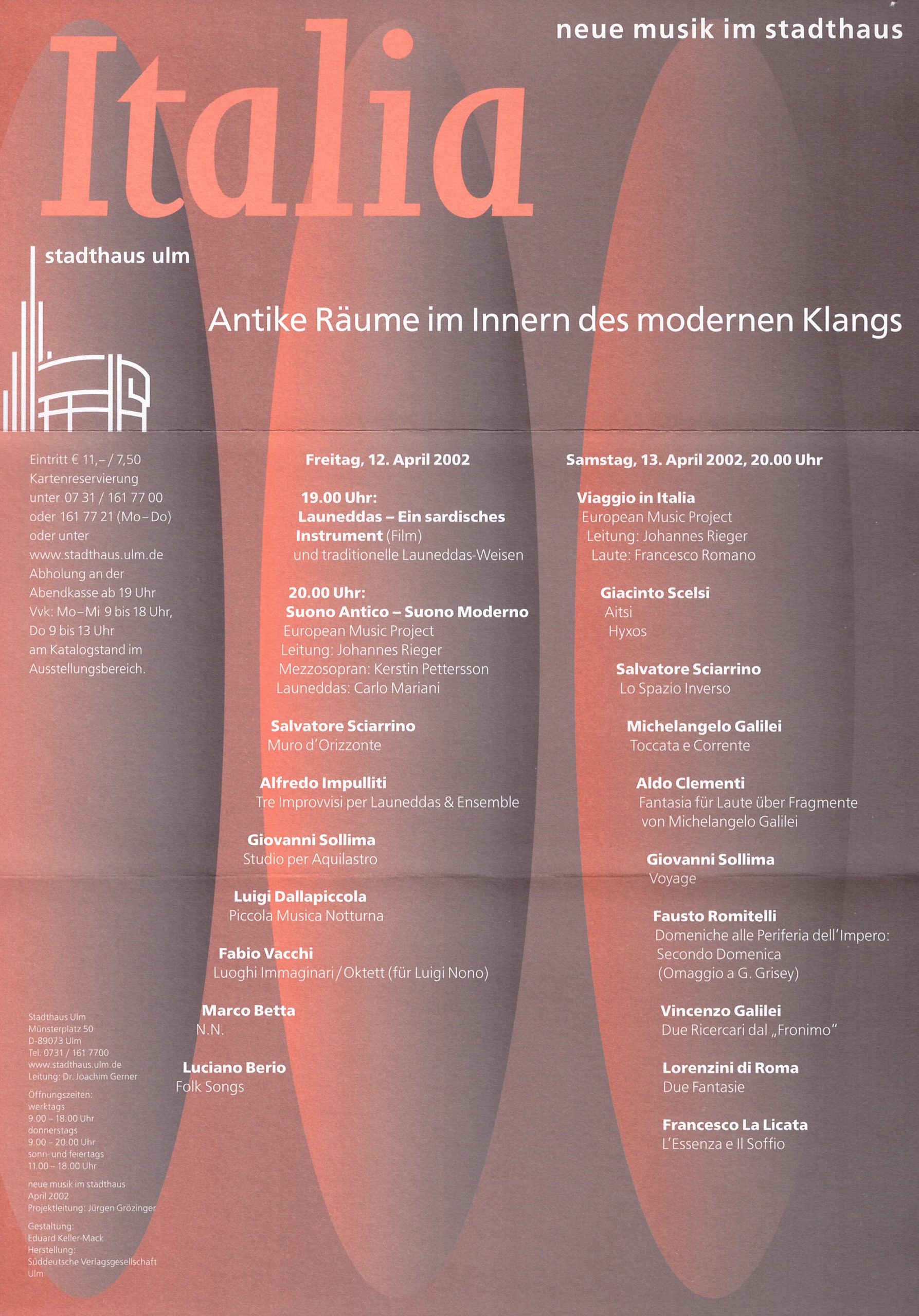
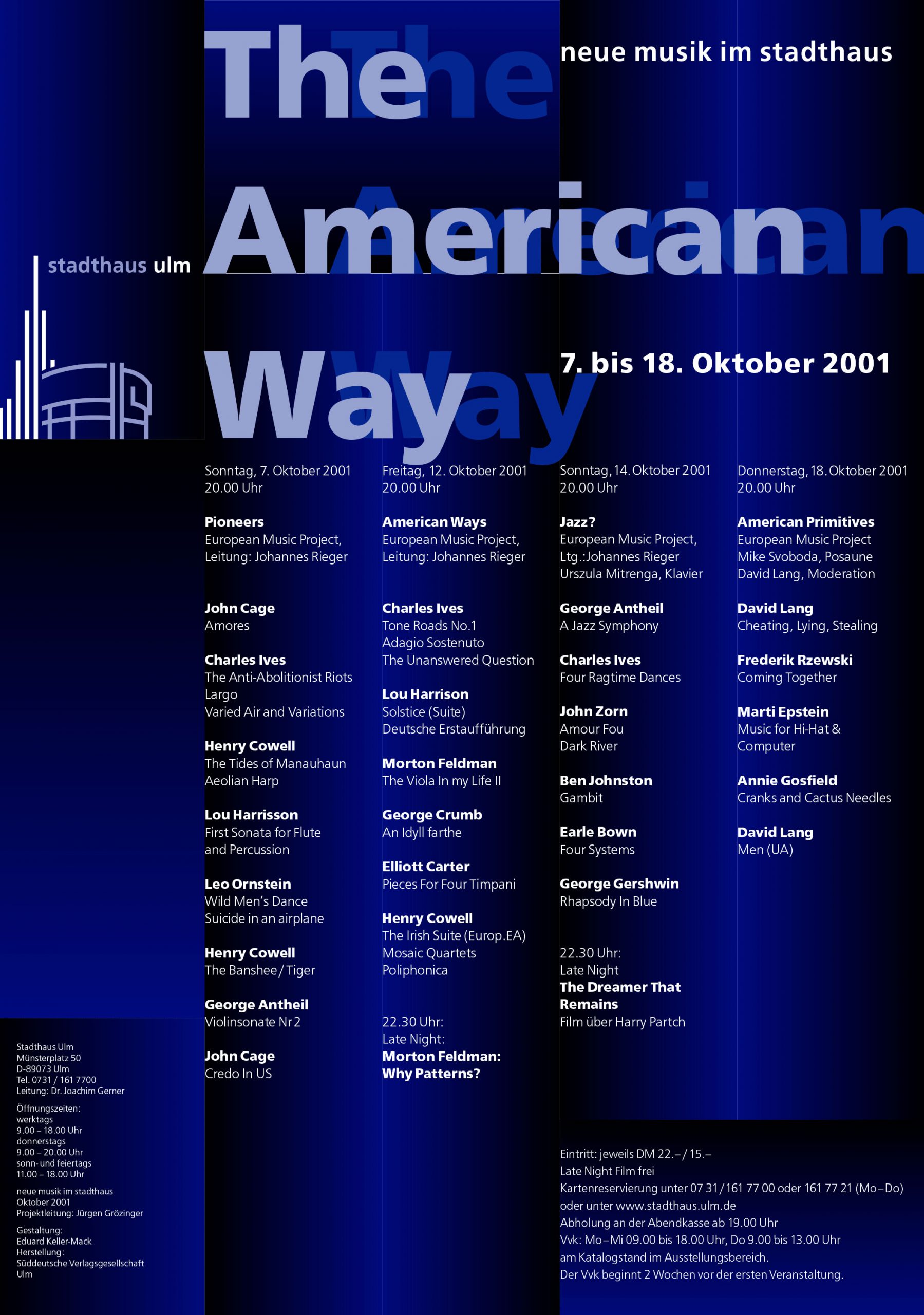
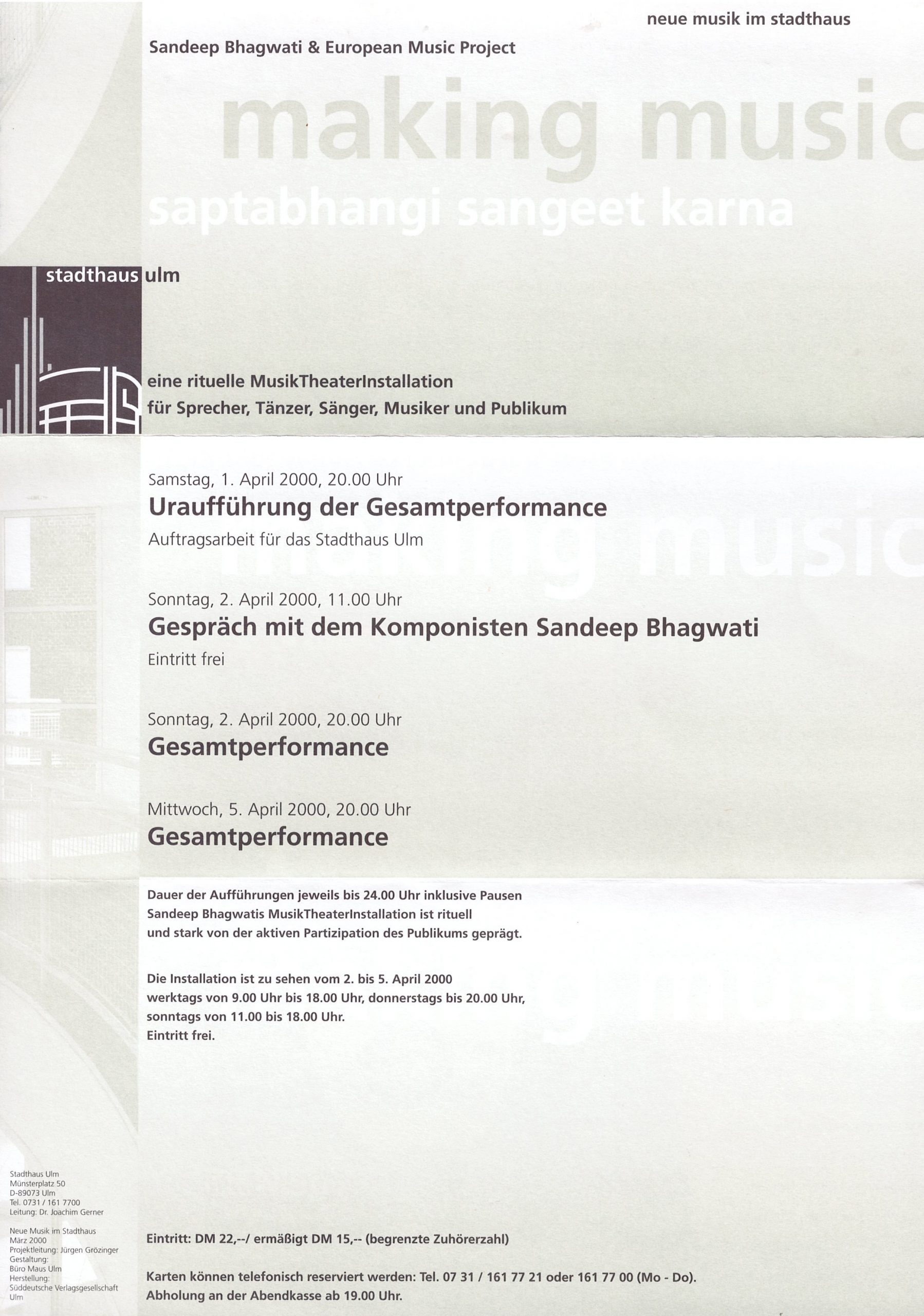
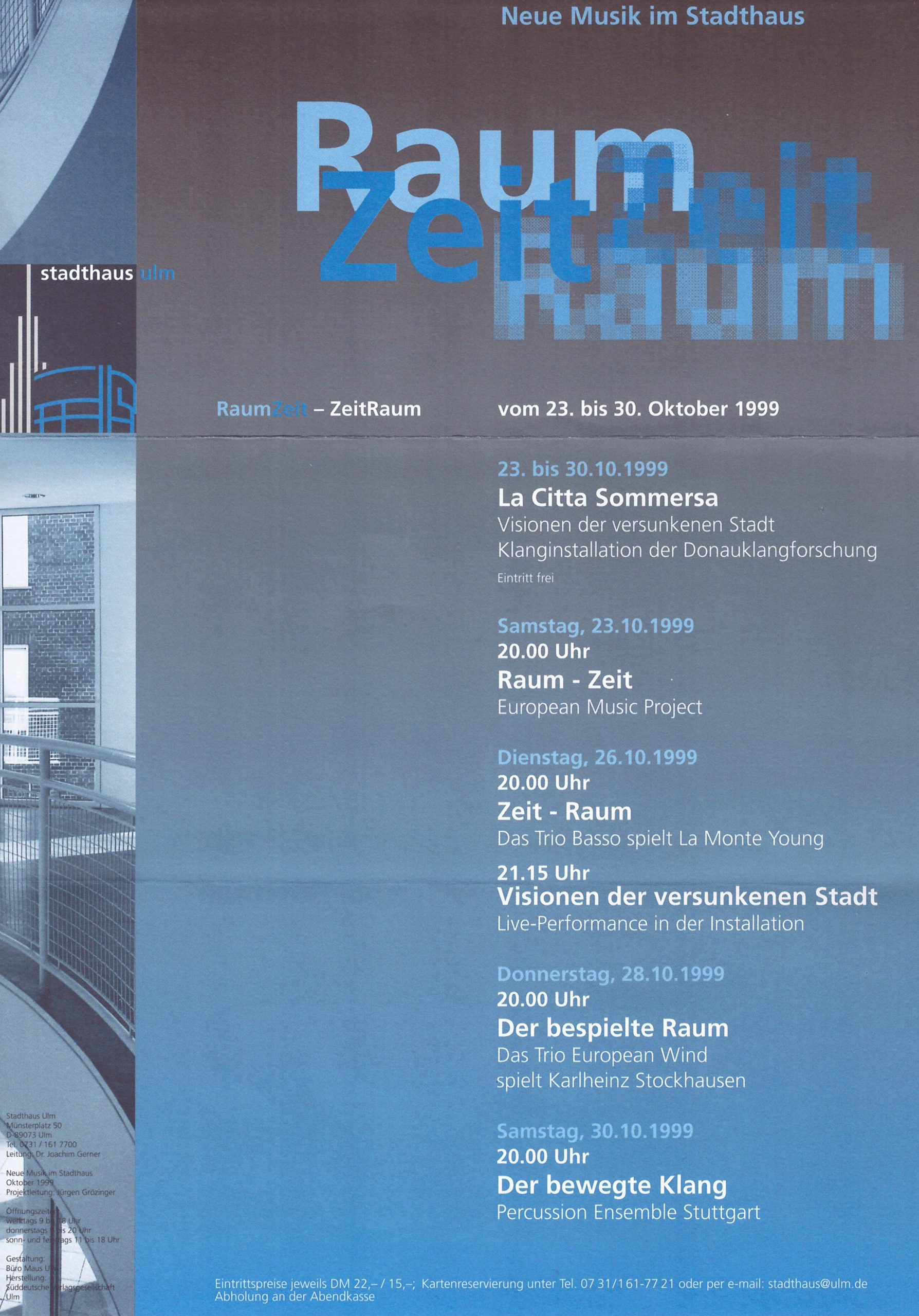
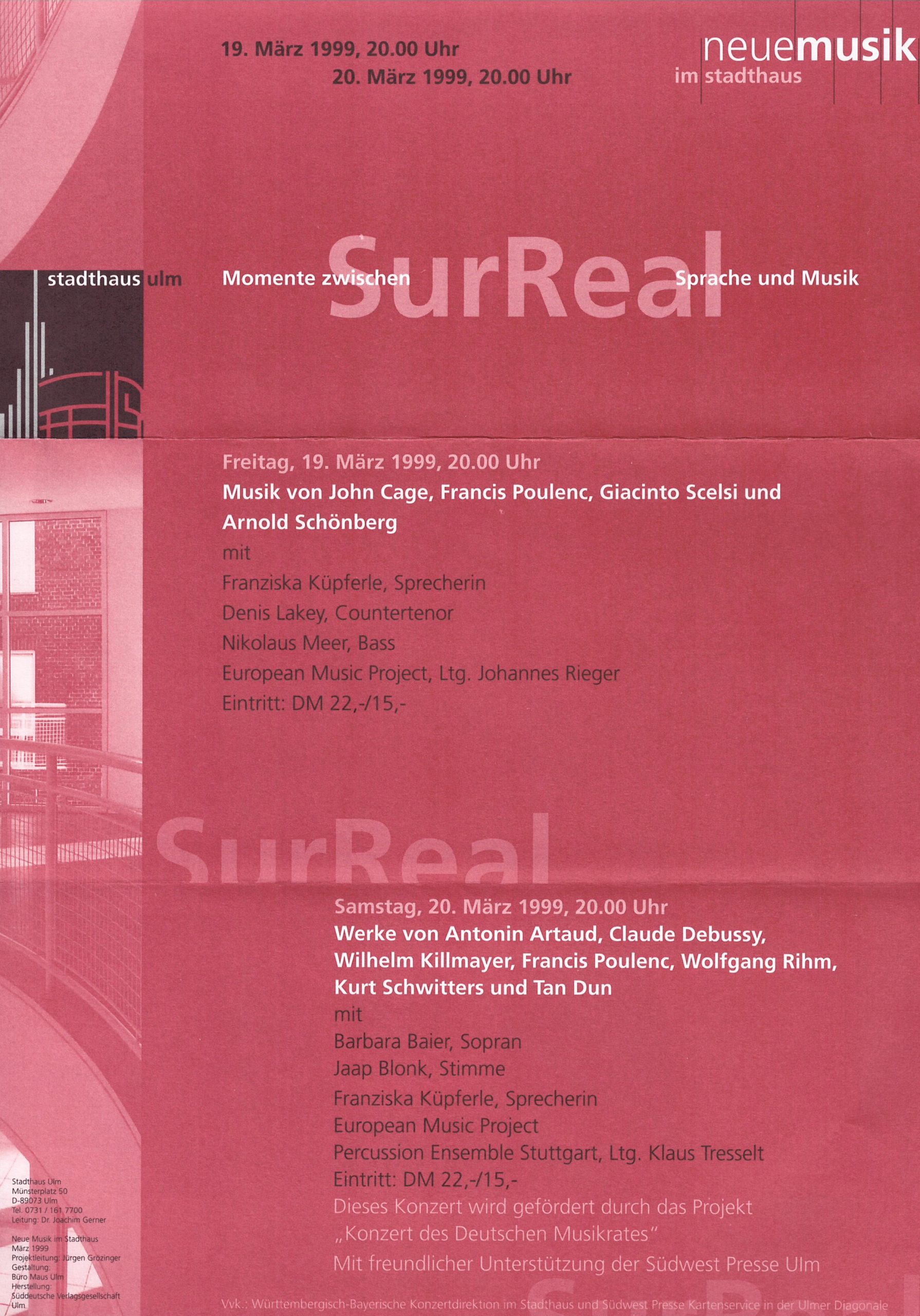
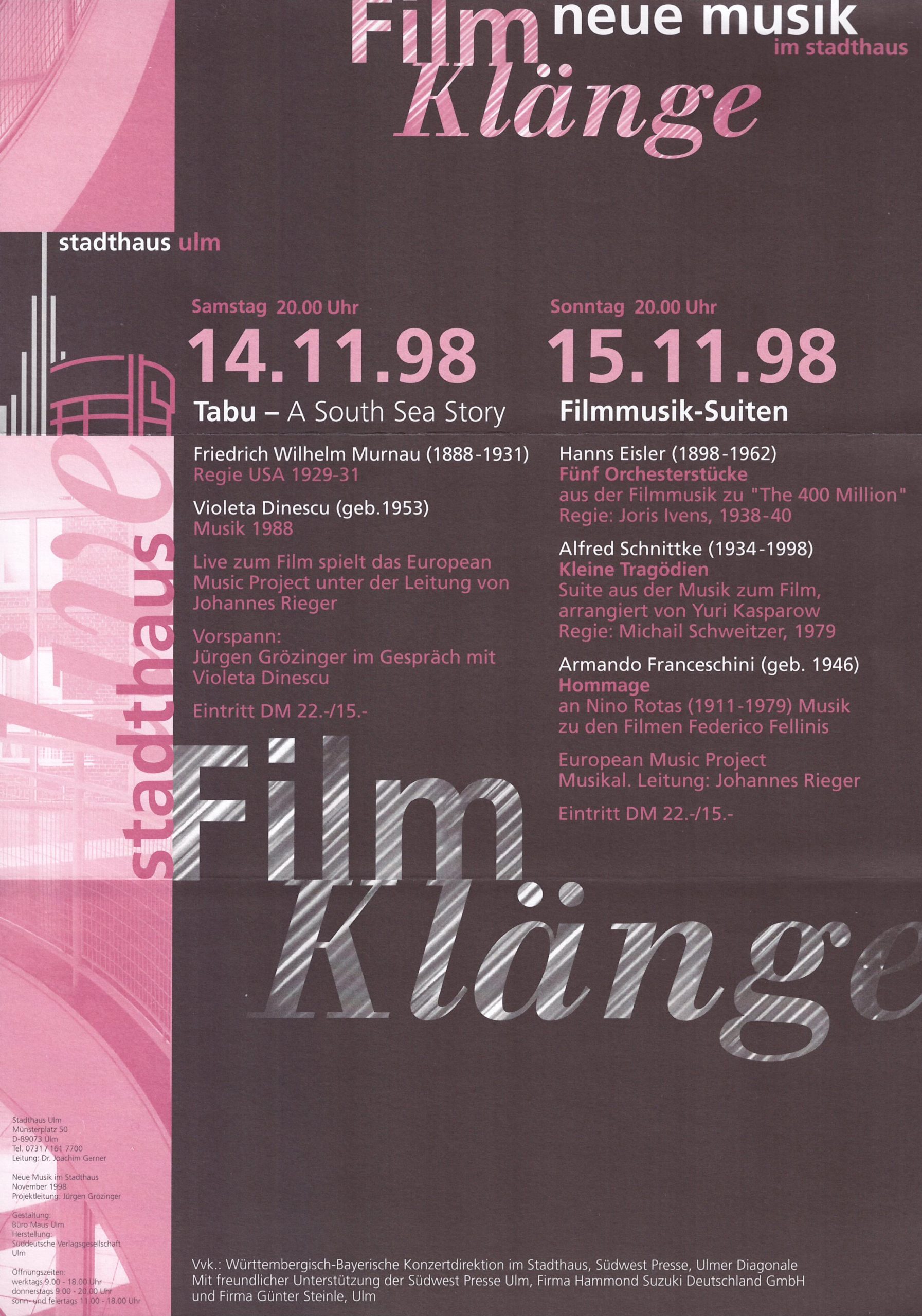
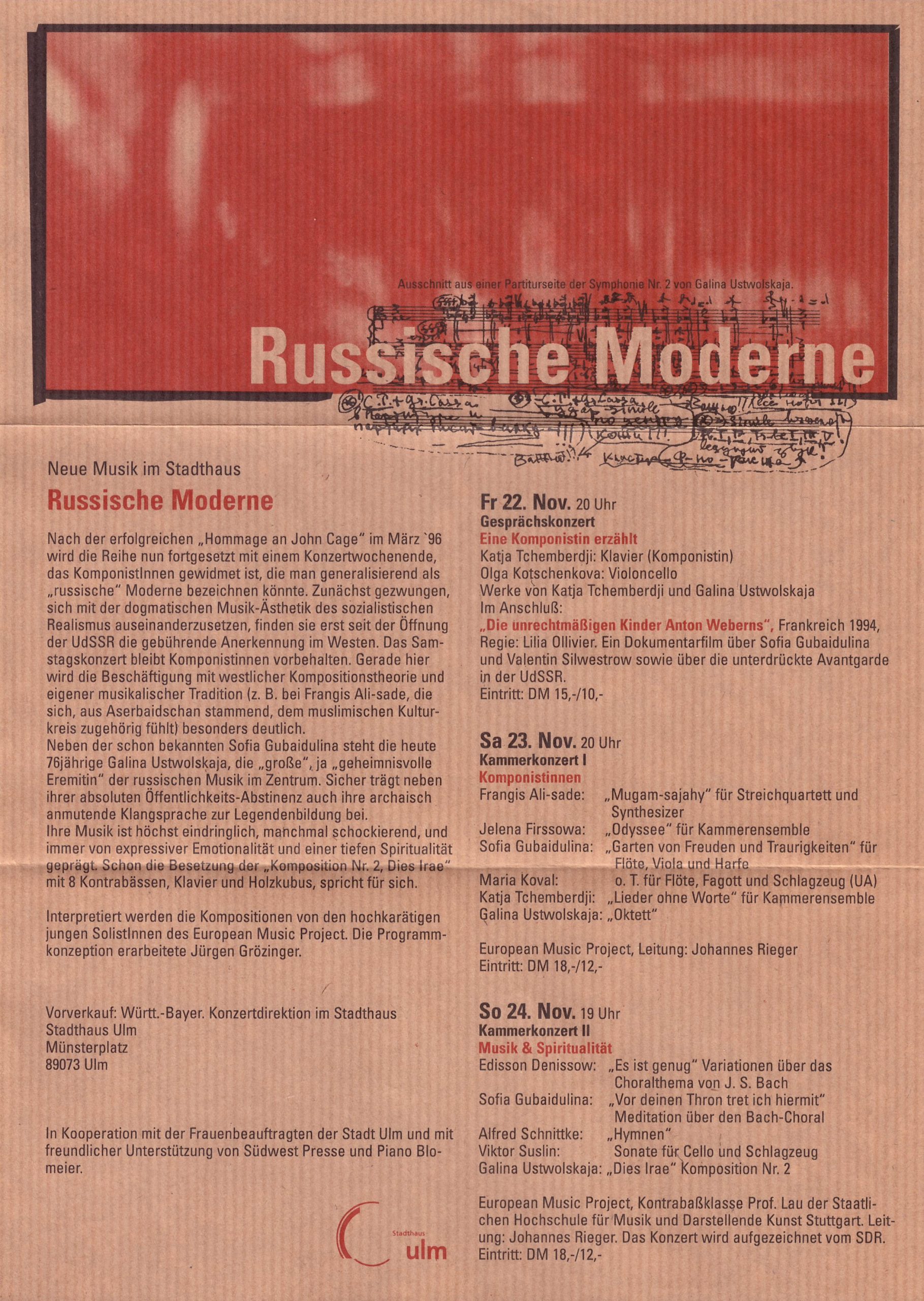
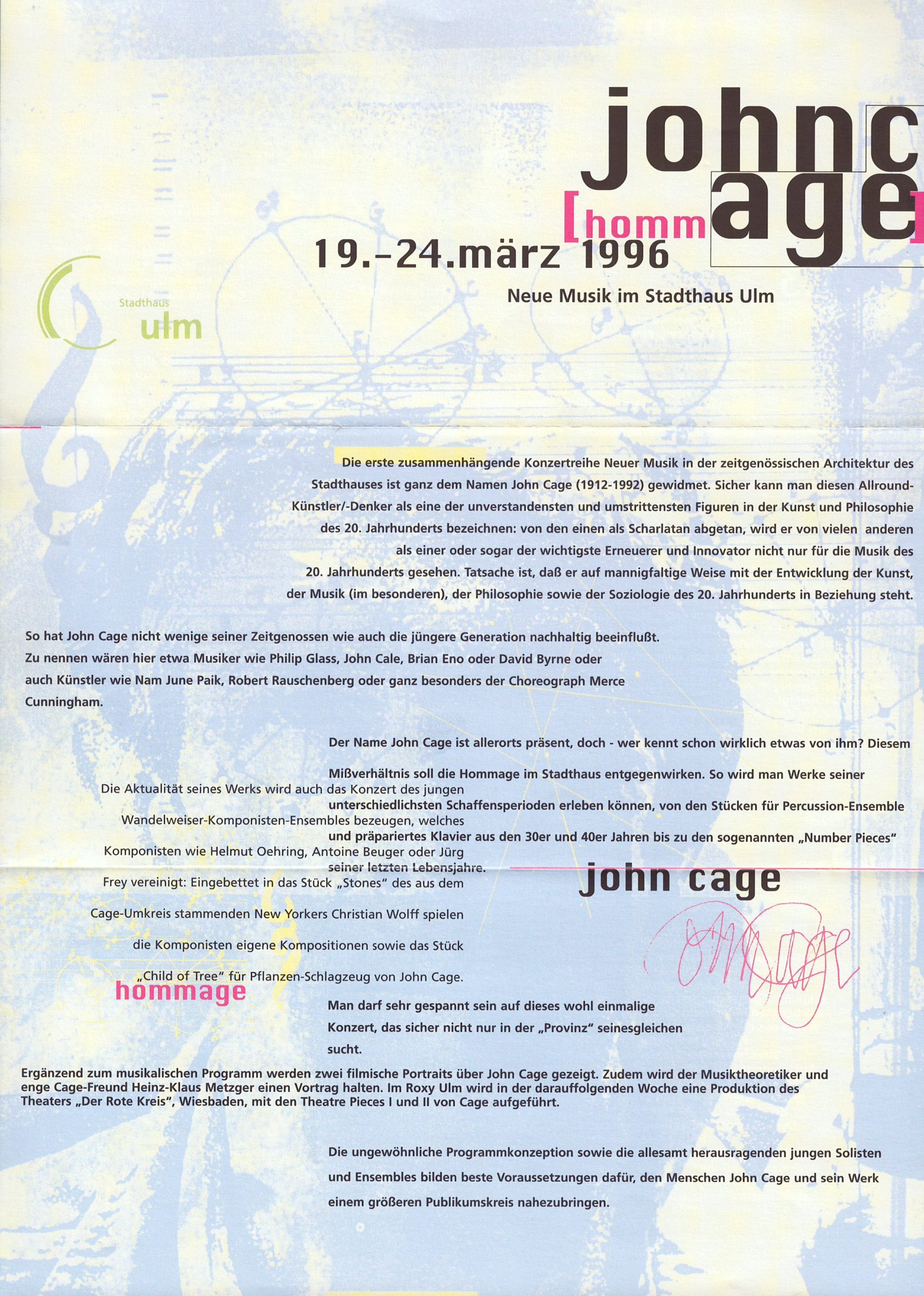
KlangHaus 1997 „ZeitLos.Franz Schubert”
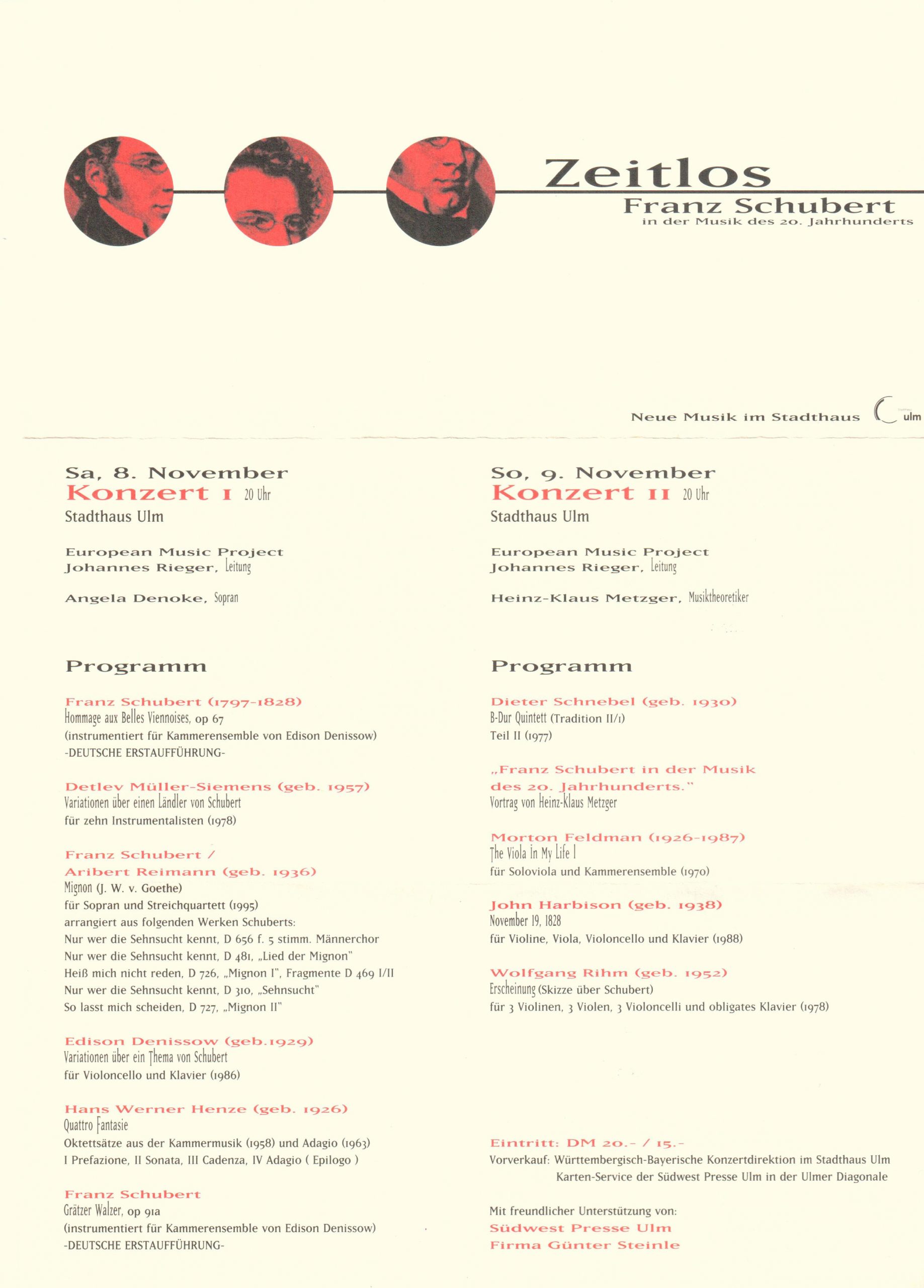
KlangHaus / Adventures In Sound
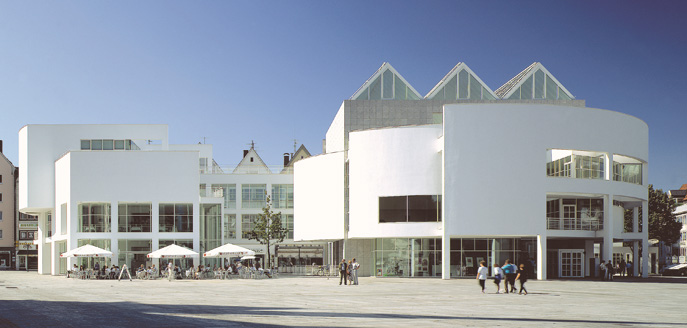
Stadthaus Ulm / photo: Martin Duckek
Statement on the End of the KlangHaus Festival
It has recently been announced that Stadthaus Ulm and the City of Ulm will no longer provide funding for the KlangHaus Festival. This marks the end of a remarkable chapter after thirty years of artistic and cultural work.
What concerns me most is not simply the end of a festival, but the cultural message it sends.
From its very beginning, KlangHaus was never conceived as an exclusive platform for specialists. Its ambition was to bring internationally acclaimed contemporary music out of its niche, to welcome audiences from diverse backgrounds, and to create new ways of listening, encountering one another, and engaging in cultural dialogue. The fact that a project with such international resonance—and realized with an exceptionally modest budget—no longer has a future inevitably raises broader questions about the place of contemporary art within public life.
I have always regarded culture not as a decorative luxury, but as an essential element of a democratic society. Spaces where people can experience new perspectives, listen deeply, and engage with one another are more important today than ever before. For this reason, I deeply regret this decision.
At the same time, I remain profoundly grateful to the outstanding artists, partners, audiences, supporters and friends who shaped KlangHaus over the past three decades. Together, we created something that reached far beyond the boundaries of a conventional festival and demonstrated that artistic excellence and openness are not opposites, but belong together.
For me, however, this is not the end of my artistic journey. On the contrary, I will continue to develop new artistic and curatorial projects in places where openness, international exchange, and artistic courage are not only welcomed but actively supported. The spirit of KlangHaus will continue to evolve in new contexts and new collaborations.
KlangHaus Festival
Founded in 1996 and curated by Jürgen Grözinger, KlangHaus evolved over three decades into one of Germany's most distinctive festivals for contemporary music. More than a festival of new music, KlangHaus became an invitation to listen: a place where artistic excellence, curiosity and openness met audiences far beyond the traditional contemporary music scene.
Its programmes deliberately dissolved the boundaries between genres, cultures and artistic disciplines. Masterpieces of 20th- and 21st-century composition stood alongside newly commissioned works, experimental music, improvisation, electronic and club culture, world music, performance, sound art and interdisciplinary collaborations. KlangHaus embraced complexity without becoming exclusive, creating a space where contemporary music could be experienced as vibrant, accessible and socially relevant.
Equally important was the way music was presented. Conventional concert formats were continuously reimagined: musicians and audiences shared the same spaces, performances unfolded throughout Richard Meier's iconic Stadthaus architecture, and listening itself became a spatial, collective experience. The festival explored how architecture, sound and human presence could shape one another.
At the heart of KlangHaus was the European Music Project, whose internationally renowned musicians brought together backgrounds in contemporary music, classical performance, improvisation, jazz and electronic music. Over the years, the festival welcomed distinguished composers and artists from around the world, establishing an international reputation while remaining deeply connected to its local community.
Throughout its history, KlangHaus demonstrated that artistic ambition and openness are not opposing values. It showed that the most adventurous contemporary art can also be welcoming, engaging and accessible without compromising its integrity.
Following the decision by Stadthaus Ulm and the City of Ulm to discontinue public funding, KlangHaus came to an end after thirty years. While this chapter has closed, the artistic ideas that shaped the festival—listening as a cultural practice, interdisciplinary collaboration and the creation of new spaces for artistic encounter—continue to inform Jürgen Grözinger's work and future projects.
Comments on the festival
Elke Moltrecht, Berlin-based curator and cultural producer:
"Having finally experienced the 2026 edition of KlangHaus, I deeply regret not having discovered this remarkable festival years earlier."
As a cultural producer and festival manager with more than thirty years of experience in Berlin, Hanover and Cologne, I came to KlangHaus both as a colleague and as a professional. I had long heard internationally renowned musicians speak highly of the festival, and my expectations were fully exceeded.
Having attended many of the leading contemporary music festivals in Germany and beyond, I can confidently say that KlangHaus belongs among them. It is a distinctive festival with an artistic profile that reaches far beyond its regional context.
What impressed me most was the way the programme guided audiences—through landmark works of the twentieth century, newly commissioned compositions, performance, dance and immersive sound installations—with exceptional artistic quality and remarkable ease. Rather than addressing only specialists, KlangHaus opened contemporary music to a genuinely diverse audience. Every concert I attended was full, and the enthusiasm of the audience was unmistakable.
Jürgen Grözinger's artistic vision is both knowledgeable and remarkably open. His ability to connect contemporary composition with electronic music, performance, intercultural influences and new concert formats gives KlangHaus a unique identity among today's contemporary music festivals. It demonstrates that artistic excellence and accessibility are not opposites.
For a city like Ulm, KlangHaus has been far more than a festival. It has been an important cultural asset—not only for the city itself, but for Germany's wider festival landscape.
Congratulations on thirty years of inspiring, courageous and visionary artistic work.
---
Richard Meier, architect, New York
The concerts of contemporary music make it possible to experience how ideas of space, music and architecture can relate to each other. I hope that these concerts will be heard in the Stadthaus for a long time to come.
----
Michael Nyman, composer, London:
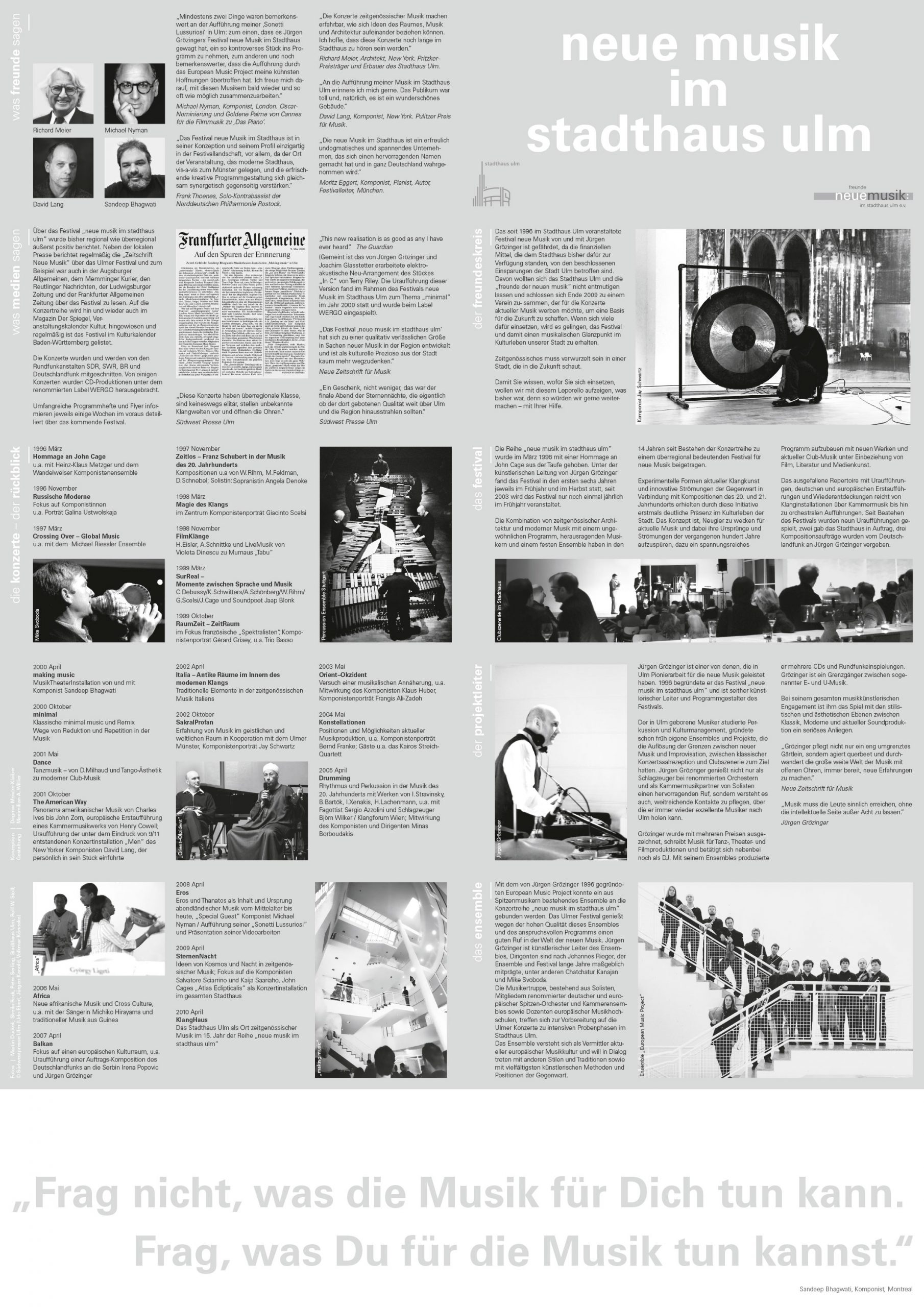
At least two things were remarkable about the performance of my „Sonetti Lussuriosi“ in Ulm: firstly, that Juergen Groezinger dared to include such a controversial piece in his programme, and secondly, and even more remarkablely, that the performance by the European Music Project exceeded my wildest hopes. I look forward to working with these musicians again soon and as often as possible.
----
Rolf W. Stoll, former editor-in-chief „Neue Zeitschrift für Musik“, Label Manager WERGO, Schott-Musik
What Juergen Groezinger does is to try to appeal to an audience outside the mainstream that does not belong to the narrower circle of new music listeners. He succeeds extraordinarily well. Ulm is far away from any centre of contemporary music. It is all the more astonishing that this works in such an extraordinary way that, despite many difficulties and cutbacks, he can maintain the festival in Ulm over such a long period of time – and appeals to an audience that I usually don’t find in concerts of contemporary music – and I visit a lot of them.
----
David Lang, composer, New York
I remember the performance of my music in the Stadthaus Ulm with pleasure. The audience was great and, of course, it’s a beautiful building.
----
Moritz Eggert, composer, pianist, author, festival director, Munich
The new music in the Stadthaus is a pleasingly undogmatic and exciting company that has made an excellent name for itself and is perceived throughout Germany.
----
Rainer Schlenz, Deutschlandfunk:
Groezinger relies on the immediacy of musical experience, on transfers that emerge from the programmatic context. He draws a bow between different genres, times, aesthetic ideas and philosophies.
Space is always present in the concepts of the festival. Also important: space and music should even be physically perceptible. For the festival, sensuality is not the end of intellectual music, but the beginning!
Grözinger wants to involve young audiences and overcome the stiffness and distance of the concert business.
The hierarchical seating order, the severity of the bourgeois concert form, which dates back to the late 18th century, at the latest the 19th century, is dissolved. Instead, Grözinger focuses on more freely conceived forms of presentation, as they were customary in previous centuries, and transfers them to the present. Parents with children sit there on stools, visitors look at the instruments, one comes into contact with interpreters.
----
Neue Zeitschrift für Musik /New Magazine For Music, Schott-Verlag
The festival „neue musik im stadthaus ulm“ has been reported very positively both regionally and nationally. In addition to the local press, the „Neue Musik“ magazine regularly reports on the Ulm festival and, for example, the Augsburger Allgemeine, the Memminger Kurier, the Reutlinger Nachrichten, the Ludwigsburger Zeitung and the Frankfurter Allgemeine Zeitung also reported on the festival. The concert series is also occasionally mentioned in the magazine Der Spiegel, Veranstaltungskalender Kultur, and the festival is regularly listed in the Kulturkalender Baden- Württemberg. The concerts were and are recorded by the radio stations SDR, SWR, BR and Deutschlandfunk. CD productions of some concerts have been released under the renowned label WERGO. Extensive program booklets and flyers provide detailed information about the upcoming festival a few weeks in advance.
The festival ’neue musik im stadthaus ulm‘ has developed into a qualitatively reliable event in terms of new music in the region and as a cultural treasure it is hard to imagine the city without it.
---
Südwest Presse Ulm:
These concerts have supra-regional class, are by no means elitist, introduce unknown sound worlds and open the ears.
Neu-Ulmer Zeitung:
Impeccable interpretations of new ideas of modern music that don’t want to be pushed into a drawer – those who weren’t there really missed something.
Frank Thoenes, Solo Double Bassist of the North German Philharmonic Rostock:
The concept and Profil of the New Music Festival in the Stadthaus are unique in the festival landscape, especially since the venue of the event, the modern Stadthaus, is located opposite the cathedral, and the refreshing creative programme design reinforce each other synergistically.
The festival is generously supported by "freunde der neuen musik im stadthaus ulm e.v."